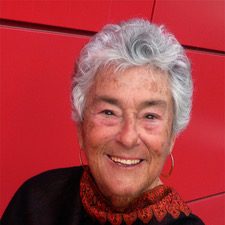
Elaine’s story begins when she is a child, when she has what she calls a DAYMARE. She is awake and falling into a pit into infinity. It appears that she is experiencing intergenerational transmission of trauma, as a result of her father’s family being killed in Lithuania, known as “ the Holocaust by bullets.” Years later, Leeder discovers the truth of their deaths and commits her life to being their memorial candle.
Leeder is a retired college professor, as well as a dynamic and charismatic speaker. She loves teaching young students about the ongoing nature of prejudice, discrimination and genocide.

Ellen Van Den Berg
Ellen tells her parents’ story of survival and resilience hiding for 3 long years in the Nazi-occupied Netherlands during World War II. She speaks about the tremendous courage of the members of the Dutch resistance who over and over found hiding places for her parents with ordinary citizens willing to risk their lives to help save lives.
Ellen also talks about growing up in the Netherlands in an environment where feelings of loss and grief were suppressed. It was not until she came to the United States that she began to understand how her parents’ unprocessed trauma had impacted her life.
Ellen was born and raised in post-WWII Holland. She came to the United States in her early 20s and eventually settled in Sonoma County. She retired from her business as a consultant and executive coach. Ellen served for 6 years as the co-chair of the Social Action Committee and currently is a member of the Board of Congregation Shomrei Torah in Santa Rosa, California. She’s a nature lover and, if not out on the trails, enjoys painting the beautiful landscapes of Sonoma County.

Emily, a second generation “child” of the Holocaust, talks about how her parents’ abilities and lucky breaks allowed them to evade the Polish ghettos and concentration camps that took the lives of their relatives. Her mother’s journeys went from Poland to Germany to Italy to England, and finally to the U.S. Her father’s journeys took him from Poland to Russia to the Mid-East to Italy, England, and the U.S.
She relates to teens trying to fit in with peers. She explains the Pyramid of Hate, from simple bullying to genocide.
Emily has a BA from UCLA in English and French, two Secondary California Teaching Credentials – Special Education and Regular – from Sonoma State University, and a partial MA from Sonoma State in English Literature. She has taught both high school and middle school.
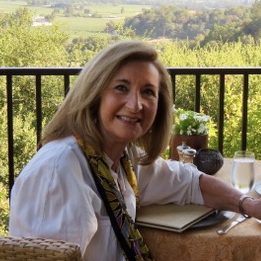
Gloria Tausk Glickman is a Holocaust descendant whose parents were in concentration camps in Germany from 1944 – 1945. Gloria was born in a displaced persons’ camp in Germany in 1946 and immigrated with her parents to New York City in 1949.
Gloria earned her B.S. degree in Math from the City College of NY, her M.A. in Math Education from Northwestern University, and her M.B.A. in Information Technology Management from Fairleigh Dickinson University. She retired in 2007 after teaching Math at the high school and college level and working in the financial services industry for numerous Fortune 500 firms in the USA, Vienna, Austria, and Singapore.
Gloria’s presentation is based upon her research from the Holocaust Museum in Washington DC and upon her mother’s interview with SHOAH, which was established by Steven Spielberg in 1994 to further the remembrance of the Holocaust. Her presentation, entitled “Horror, Tragedy, and Survival,” concludes with the lessons she has learned from her parents: Be Optimistic, Be a Survivor, Have Gratitude, Don’t Give Up, and Be the Best You Can Be.
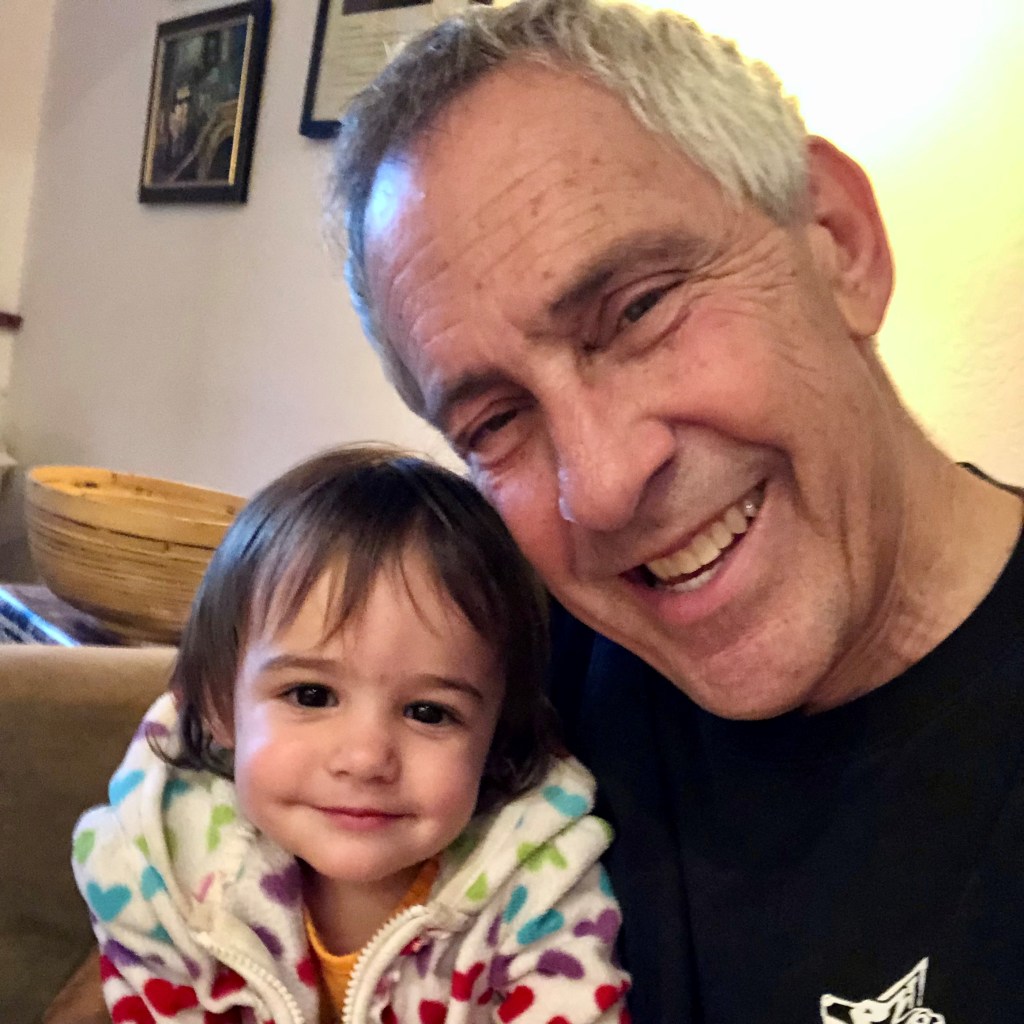
John Kornfeld
John Kornfeld is the son of Holocaust survivors who escaped from Vienna, Austria, in 1939, served in the Allied forces, and then settled in Los Angeles after the War. He and his wife moved to Sonoma County nearly 40 years ago, built a house on 20 acres where they raised their three children, and through work and family life became integrated into the local community.
John earned his A.B. degree in English from Princeton University, his M.A. in Education from Sonoma State University, and his Ph.D. in Education from Indiana University. He spent 16 years as a K-12 teacher before transitioning to higher education. Beginning in 1996, he worked at Sonoma State, serving as Professor of Education, Chair of the Department of Curriculum Studies and Secondary Education, School of Education Director of Graduate Studies, and Associate Vice President for Undergraduate Studies. He retired in 2020.
Since 2005, John has served on the Board of Directors of West County Health Centers; he has been Board Chair for the past decade.
John grew up among a tight-knit community of Holocaust refugees in Los Angeles, yet none of them ever spoke about their traumatic experiences living under the Nazi regime, or their subsequent escapes to the United States. His presentation describes his personal journey uncovering his parents’ secrets and struggling to come to grips with the pain and trauma they suffered.

Marion Fredman
I was 16 days old when the Nazis raided the Dutch house where my parents had been hiding for 3 years. One of the sisters who owned the home stalled as my parents hastened to the space behind the wainscoted-wall in the upstairs room. Then she opened the door and the Gestapo and their dog hurried in. As they entered one of the officers stared at the dark newborn in a basket. She’s my child, Tris, our Dutch savior, said. There was an Italian soldier.
Later the Nazis entered the room where my parents stood behind the paneling. Their dog sniffed the wall a few times. Then it turned and pulled its Nazi handler out of the room.
My parents were German Jews who fled an increasingly oppressive Germany in 1938, and had lived in Velp, Netherlands for 4 years. Then the Nazis began rounding up the country’s Jews. Rather than going to a “camp,” they contacted the Dutch underground and were sent to the home of two sisters who had been missionaries in the Indies before the war. The sisters had heeded their minister’s plea and had decided God wanted them to risk their lives and conceal the Jewish fugitives. I was 6 weeks old when Canadian soldiers liberated Apeldoorn. After they were freed, my parents learned that their parents and many friends and family had perished in the camps. Some of my father’s siblings were murdered and a few had survived.
Maureen Svenson
Maureen is the child of Europeans who emigrated to the U.S. after W.W.II. She tells their very different sagas with an eye to the complexities and commonalities of immigration and identity.
Her father was arrested on the night of the Kristallnacht pogrom (Nov. 9, 1938) and sent to Sachsenhausen concentration camp. She tells his memories of growing up as a Jew in Germany in the 1920s and 30s and his subsequent escape to Shanghai, then later to Israel, finally winning his “big prize”: permission to enter the United States. She also tells of his experience as a refugee in the United States of the 1950s.
She tells the story of her mother, who grew up in Fascist Italy and then in Paris, from where she fled as the Nazis invaded. After her mother’s death, Maureen found a diary in which her mother described daily life as a teen and the eldest of 7 children in the war zone of central Italy.
Maureen holds degrees in political science and history, and an M.A. in Special Education. She enjoyed a career as a learning specialist and secondary school teacher in both public and private settings. Now semi-retired, she works with neurodivergent students and their families when she is not traveling or hanging out with family and friends.

This photo of Peter Krohn was taken in 1938 in Berlin shortly before Kristallnacht. The Teddy Bear was a gift from Peter’s grandmother whom he was visiting.
Peter tells the story of how his Teddy Bear that he was very attached to, may have saved his life as well as that of his parents. Within Peter’s story he weaves some of the history of the War, as well as the anxiety, loss and grief he and his parents experienced before, during and even after WWII. His family were among the very fortunate who managed to get visas to Canada, just three weeks before they would have been deported to a concentration camp.
He challenges students to be ambassadors of kindness to others, to stand up for what’s right and to contribute to a better world.

Rhonda Findling’s father survived the Holocaust in hiding from age 6 to 9 mostly in southern France, along with his two brothers, while their two sisters were hidden in separate convents in Belgium. All five children survived, which is miraculous considering only 7% of Jewish children survived the Holocaust. Their parents (Rhonda’s grandparents) were both murdered by the Nazis.
Rhonda is a counseling faculty at Santa Rosa Junior College, where she serves incarcerated youth in the college’s Juvenile Hall online education program. She founded the college’s thriving on-campus program for formerly incarcerated students, but retired from full-time faculty service in 2022.
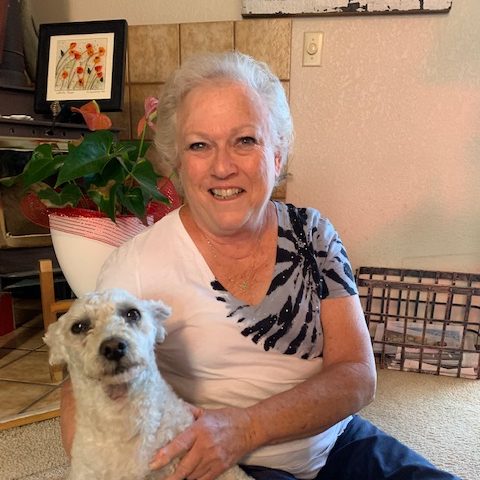
Shelley Bauer
Shelley speaks because her parents are no longer here to tell their own stories.
Shelley’s mother, believing in the importance of wide knowledge about the Holocaust, shared her experiences with many people.
The story begins in Germany and illustrates the power of the will to survive in that horrific time. Both parents were liberated from concentration camps. They later reunited and came to America to start a new life.
Shelley tells how growing up in a family of survivors in Petaluma affected her own childhood.
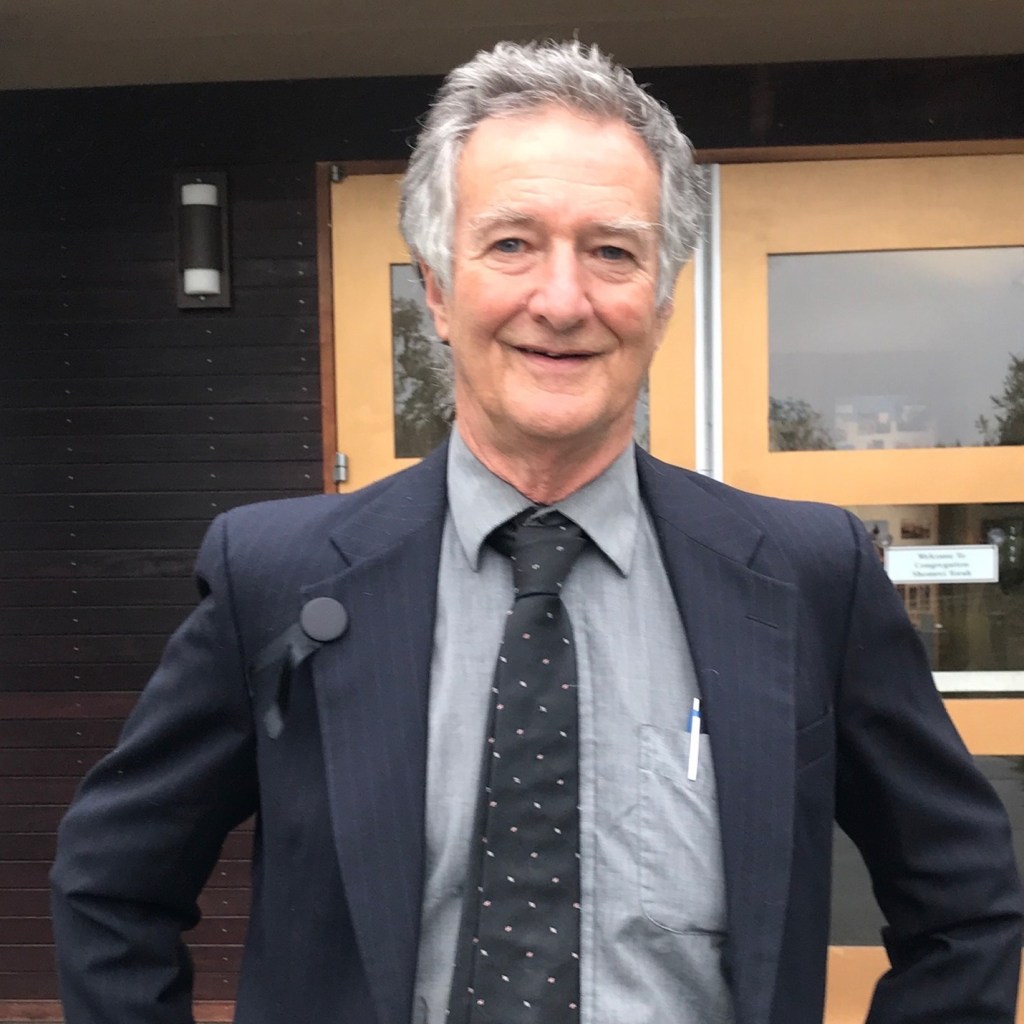
ERIC ANGRESS
Eric is a mostly retired construction contractor and former educator, navigating retirement and has been presenting his Dad’s Holocaust story, “Surviving the Nazis,” in order that his story may continue to be told in the larger context of Holocaust and Genocide education. Eric’s parents were both Holocaust survivors, and met in high school at the Joodse Lyceum in Amsterdam, where Anne Frank was a student as well. Eric’s father, Hans, fled Germany with his family in 1937, and Hans’s older brother Tom was able to emigrate to the U.S. where he ultimately joined the Army and fought the Nazis as an interrogator of Prisoners of War as one of the “Ritchie Boys.” Eric’s grandfather was arrested in Holland in 1941 and perished in Auschwitz. His father, grandmother, and Hans’s other brother managed to survive the war in hiding.
Hans’s story tells what life was like, first growing up in a hostile Germany, and then as a refugee in Holland, having to survive the Nazi occupation in hiding, including some harrowing experiences and narrow escapes.
Advisors
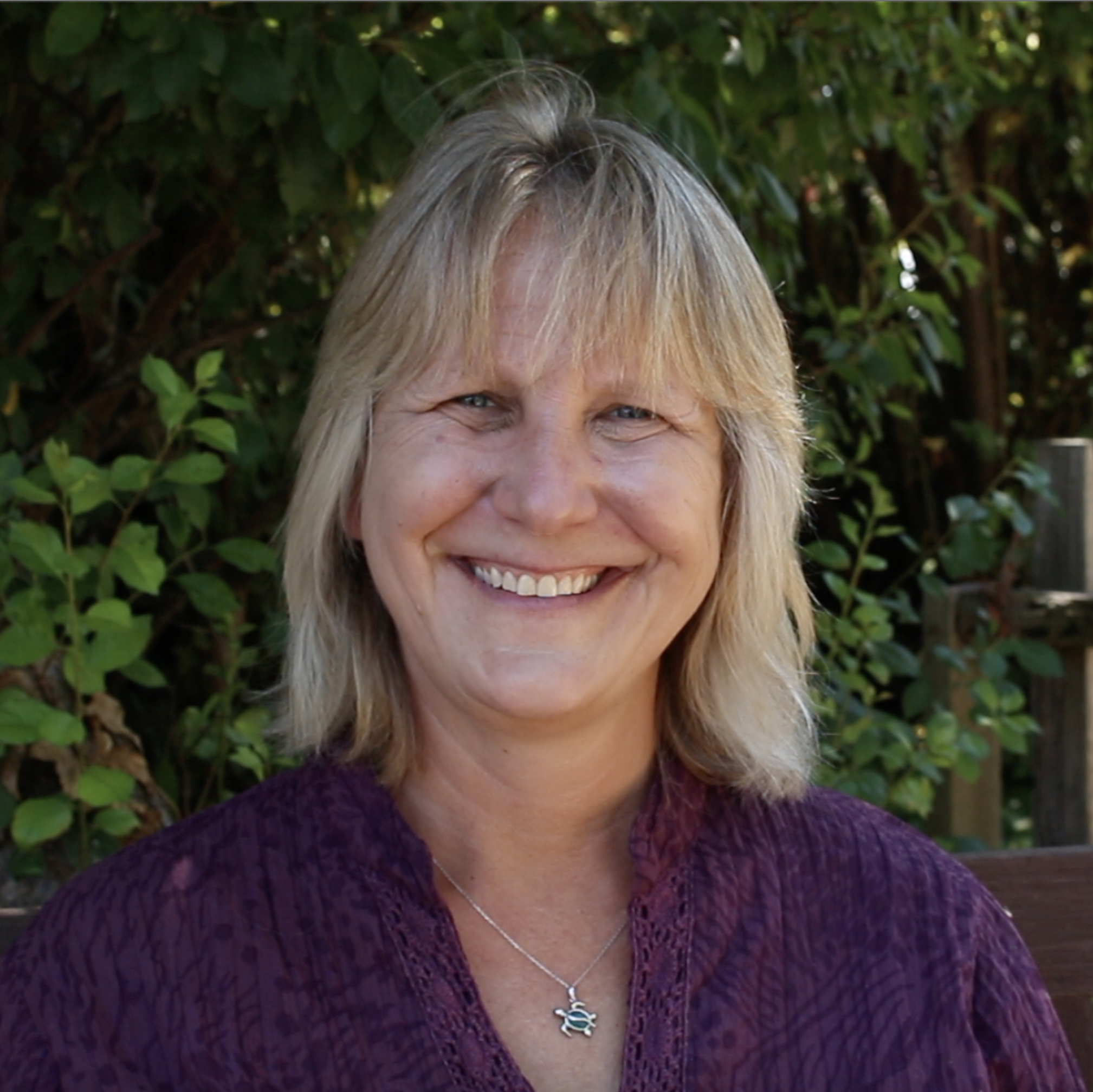
Kate McGerity
Kate’s role as a social studies teacher includes helping her students identify ways we can learn from our history to improve their lives and the lives in our community. She has worked as a social studies teacher in the Cotati-Rohnert Park school district since 2001. Through her work with The Holocaust Story Project, Kate helps the classroom speakers share their stories as first- and second-generation Holocaust survivors. These classroom visits help students to understand the experiences and atrocities of the Nazis and their collaborators on our speakers’ families living in Europe during WWII.
The Holocaust Story Project speakers discuss human rights violations and genocide, as well as the effects of the totalitarian government’s actions during WWII in Europe. Students hear strategies on how to intervene and reduce destructive behaviors in their community, like bullying, exclusion, stereotyping, and intolerance. Kate knows that when the Holocaust Story Project speakers educate classes about the Holocaust, those students will identify ways to improve conditions for those discriminated against in the US today.
Connie Williams
Connie is a cheerleader for The Holocaust Story Project. She met the group when she was the librarian at Petaluma High School and invited speakers to come over a two-day period to speak with students in the library. For 3 years, the school looked forward to these stories by the speakers. It is her desire to get the word out to librarians and teachers across the nation about this fabulous group.
Connie captures primary sources for teachers at chwms.libguides.com.
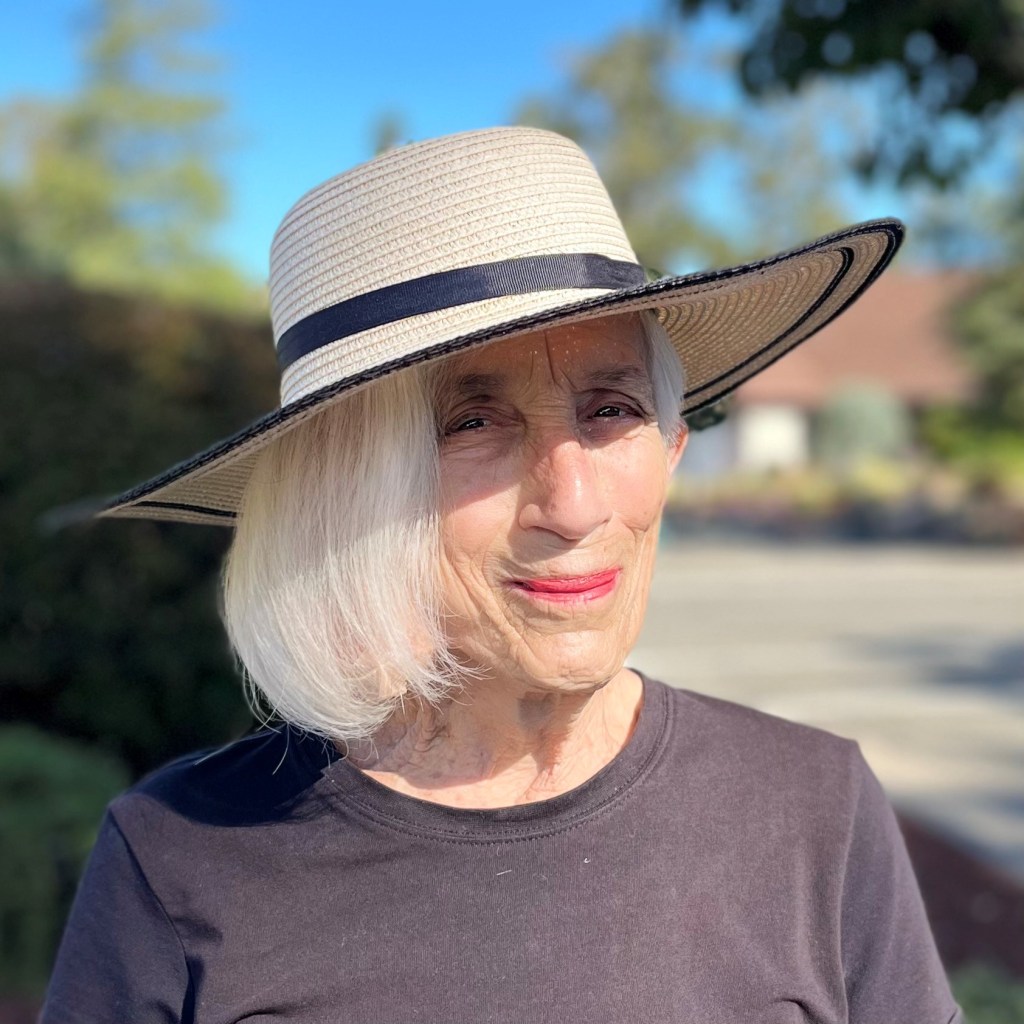
Flora Lee Ganzler
Flora Lee taught History for 17 years at Rancho Cotate High School and founded the Holocaust Story Project. It became obvious to her that some of the most engaging lessons for students were speakers who were eyewitnesses to historical events. Knowing that if WW2 Holocaust survivors didn’t tell their stories now, the opportunities for future generations to emotionally connect with them and understand the pain that was inflicted on them would be missed. From hearing the stories of survivors firsthand, students can hopefully understand that their own negative behavior towards others can cause great damage. And thus, the Holocaust Story Project was born.
 Holocaust Story Project